3D Modeling Tips and Tricks
Practical 3D modeling tips on choosing the right software, paying attention to detail and keeping your models optimized.
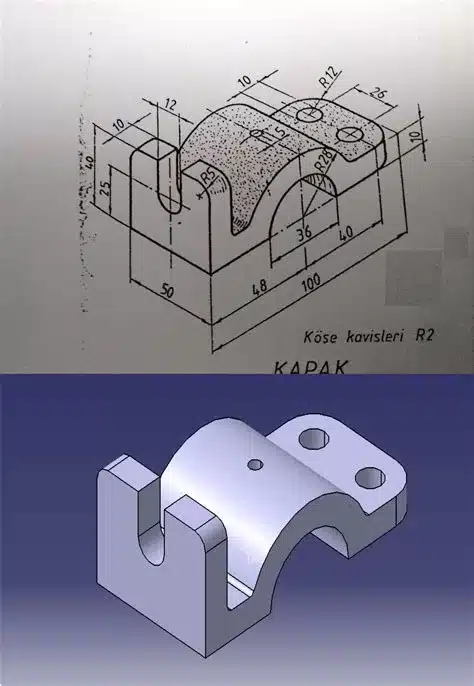
3D modeling is the process of creating three-dimensional objects in digital environments, and it is used across a wide range of fields, from animation and engineering projects to video games and virtual reality applications. This art form opens the door to a captivating world, and it involves many techniques and subtleties worth learning. If you want to find your place in this fascinating universe, you need to know how to use the right tools, how much care to give to details and how to keep your project optimized.
In this post, we share 3D modeling tips and tricks to help you push the limits of your creative mind. Starting with “choosing the right software for modeling,” we’ll move on to “paying attention to detail” and “not forgetting optimization.” Let’s begin and look together at the knowledge you need to get one step ahead in your 3D modeling journey.
Choosing the Right Software for 3D Modeling
Success in modeling projects depends heavily on the capabilities of the tools you use. Choosing the right software means analyzing the project’s requirements in detail and identifying the tool that best fits them. The software should be able to build complex models quickly and efficiently.
From architectural designs to industrial products, different modeling fields call for different software features. For example, software used for animation and game design should offer strong animation tools and real-time rendering. Still, ease of use and the availability of learning materials should not be overlooked, because learning and using complex software can slow down the modeling process.
When choosing software, professional modelers consider both how well it fits their current workflows and how flexible and extensible it will be for future projects. Thinking long term means the software should meet not only today’s needs but also tomorrow’s challenges. That is why it is a real advantage when the chosen software stays up to date and can be extended with new plugins.
Another important factor is the file formats the software supports and its integration capabilities. For interdisciplinary work and collaboration, the chosen software must be compatible with industry standards and integrate easily with other tools. Choosing the right software for modeling requires carefully weighing a set of criteria in light of all these factors.
Paying Attention to Detail in 3D Modeling
Paying attention to detail is generally seen as a critical factor for high-quality projects and successful results. Whether you are thinking of a skilled modeling job or a thorough optimization process, carefully considering small components and process steps is regarded as an essential approach for the success of the whole project.
Whether it is an architectural design or a complex engineering problem, every detail should be treated as a small building block, and none of their importance should be overlooked. In an architectural modeling project, for example, functional requirements and structural soundness demand great attention and rigor alongside visual aesthetics.
Keeping details in mind also means reducing margins of error and increasing efficiency. In complex projects especially, this approach lets you anticipate potential problems from the start of the design and develop proactive solutions to them. Because details directly affect the overall performance of the project, each of them should be carefully examined and evaluated.
In short, paying attention to detail is a key strategy for achieving successful, functional results. The care shown at every stage becomes one of the most important factors determining the quality of the final product or project. For any individual or organization pursuing professionalism and excellence, watching the details is a principle that should never be taken lightly.
Don’t Forget Optimization
Optimization is a critical process that aims for the highest level of performance, efficiency and cost-effectiveness in any project or workflow. Particularly in technology and software, optimization work deserves serious attention so that systems use their capacity well and resources are managed sensibly. With a direct effect on application performance and user experience, this factor can significantly influence a project’s success.
Optimization should be considered at every stage of the work. From design through development, testing and deployment, careful analysis should be done at each step to improve performance and avoid wasting resources. High efficiency lowers costs and also strengthens the system’s or software’s competitiveness in the market.
Continuous monitoring of systems and making the adjustments optimization requires are part of a dynamic process. Following technological developments and market trends means optimization strategies need regular updating. This is essential for keeping up with fast-moving innovations in areas such as big data, AI and machine learning.
Another important point to remember is that optimization work is never a one-time activity. As a process that requires ongoing development and improvement, performance and efficiency indicators should be reviewed regularly and analyzed for potential improvements. In short, a successful optimization process is an essential investment that keeps the system’s performance sustainable and scalable over the long term.
Frequently Asked Questions
Which software should I choose for 3D modeling?
The right software choice depends on your personal needs and the project’s requirements. If you want to create professional-level models, you can consider popular options such as Blender, Autodesk Maya or 3ds Max.
What should I watch out for when I start modeling?
When you start modeling, first pay attention to the details and scale of your design. Also keep in mind what the model will be used for, and balance its functionality with its aesthetics.
Why are details so important for my modeling?
Details increase the realism and quality of your 3D model. Well-crafted details add depth, enrich the visuals and leave a strong impression on viewers.
How can I optimize performance in my modeling?
Optimize without needlessly increasing the polygon count while preserving the model’s details. Setting texture resolutions sensibly and cleaning up unnecessary geometry also improves performance.
What should I do to create more complex models?
To create complex models, you should master the basic modeling techniques and learn more advanced tools. Working in modules and adding details step by step is also helpful.
What should I focus on while learning 3D modeling?
While learning 3D modeling, focus on core modeling principles, a variety of modeling techniques and software tools. Practicing on real projects is the most important step for developing your skills.
How can I improve time management in my modeling projects?
For time management, break your project into small parts and set reasonable time frames for each. For complex models, you can also move faster by deriving them from simple forms.


