How to Increase the Value of Your Architectural Rendering Service
Strategies to make your architectural rendering service more valuable to clients: concept, software, visualization, light and shadow, and smart budgets.

With the help of fast-moving technology, the world of architecture and visualization gains a new dimension every day. Architectural renders are among the most striking parts of this process. Seeing a design leave the page and become a three-dimensional reality makes the projects presented to clients more impressive and leaves a lasting impression on potential buyers. In this article, “Increase the Value of the Architectural Rendering Service You Offer Clients“, we share strategies and tips that will add value to your projects and set you apart in your clients’ eyes. We cover a range of key topics, from strategic concept development and choosing the right programs for high-quality renders to effective visualization techniques and creating realistic atmospheres with light and shadow, and we also look at how to stand out with cost-effective solutions. Let’s increase the value of your rendering services together!
Focus on the Client with Strategic Concept Development
Strategic concept development is the key to solutions tailored to clients, and it is critical for meeting and exceeding their expectations. Creative strategies that come from in-depth market analysis and a careful study of client needs help you build a strong connection with the client and offer services that add value. A concept built around the client’s vision and goals guides every stage of the project and paves the way for productive, effective and satisfying work.
For flawless project delivery, close communication and interaction with the client during concept development is essential. Listening to the client, understanding how they think and fully grasping their needs is a must. This deep understanding ensures that every drawing and design delivered within the project reflects the client’s needs and maximizes their satisfaction. It also helps you stay a step ahead of the competition and keep your focus entirely on meeting the client’s expectations.
Offering creative solutions and developing innovative ideas are essential parts of strategic concept development. A strategy fed by the input from every client meeting keeps the concept up to date and lets you adapt quickly to changes in the market. This dynamic approach helps your project stand out from others on the market and increases the value of the service you offer. Developing the strategic concept correctly also optimizes your workflow and saves time and resources.
In short, strategic concept development is the foundation of client-focused work and improves the quality of your client relationships. Investing in it, so that you develop projects that catch clients’ attention, excite them and meet their needs precisely, opens the door to successful business results. That is why giving your strategy process the attention it deserves and continually improving it will strengthen not only your projects but also your position in the business world.
Use the Right Programs for High-Quality Renders
The software you use is very important for achieving high-quality renders. Although there are many rendering programs on the market, each offers different features and works differently. By using the right tools, you can raise the quality of your work and make your projects more impressive.
The key features to consider when choosing a professional rendering program are realism, speed and a user-friendly interface. Programs considered leaders in this field include 3ds Max, Maya and Cinema 4D. Each offers excellent solutions, especially for complex models and images.
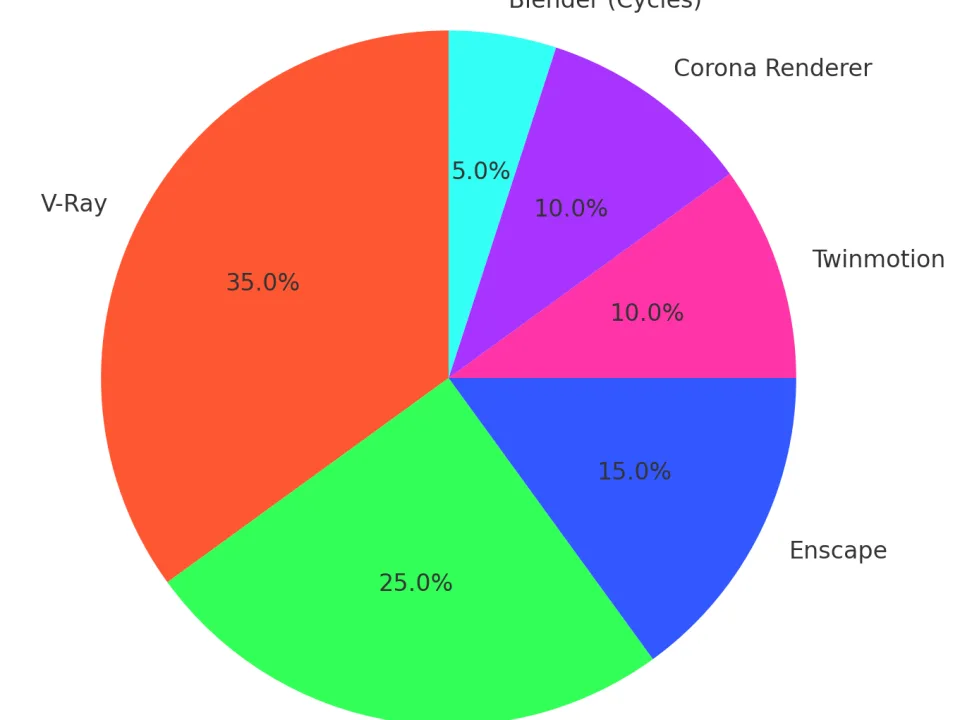
Another important point to consider is your choice of render engine. Render engines such as V-Ray, Arnold and Corona let you create highly realistic renders while aiming to keep render times to a minimum. Compatibility between the program and the render engine directly affects functionality and final output quality.
Another thing to watch in rendering is whether your hardware meets the software’s requirements. Hardware specifications such as GPU and CPU power, memory (RAM) and storage become even more important as your project grows in size and complexity. Not overlooking the powerful hardware you need for quality output will speed up rendering and improve the result.
Improve Your Work with Visualization Techniques
Visualization techniques play a vital role in modern business and are very effective at improving productivity. Impressive images and graphics strengthen client communication and help you improve your marketing strategies. Remember that this approach is a key factor in raising the bar for your work, especially in graphic design and multimedia.
Using advanced visualization techniques such as 3D modeling and animation to create realistic, detailed images can also make your sales presentations and product launches stand out. With high-quality visualizations like these, your clients can better understand the information you present and see the potential of your projects more clearly.
Virtual reality (VR) and augmented reality (AR) technologies are also finding more and more uses in business. They are ideal for enriching the client experience and presenting even the most complex ideas with ease. An architect, for example, can let clients experience spaces that have not even been built yet through virtual tours.
Applying excellent visualization techniques matters if you want your business to be more competitive and innovative. By visibly raising the quality and impact of your work, you can increase your value in the eyes of both potential and existing clients. Ultimately, techniques with strong visual storytelling power are the key to moving your work forward successfully and sustaining it.
Show the Importance of Light and Shadow in Architectural Renders
In architectural rendering, the importance of light and shadow, used to create a virtual atmosphere and heighten the sense of realism, cannot be overstated. Beyond illuminating a scene, light also has a guiding role: it defines and directs attention to the areas you want the viewer to notice. Shadows, likewise, play a critical role in reinforcing spatial relationships between objects and strengthening the sense of depth.
The lighting of an architectural scene is the main factor in bringing out the character and ambience of a building. Soft, warm light, for example, is ideal for creating a relaxing, comfortable feel. Sharp, cool lighting, on the other hand, can be chosen to emphasize a modern, minimalist design language. That is why the intensity, color and direction of light in a rendered scene should be planned carefully.
Another element that increases realism is using shadows correctly. In the real world, shadows vary with many factors, such as the angle and position of the light source or other objects nearby. In rendering, taking these factors into account and creating accurate shadows in the virtual environment is important, because shadows clearly reveal the relationships and sizes of objects in the scene.
In short, the use of light and shadow in architectural renders is a detail that can significantly improve the presentation quality of a project and leave a strong impression on viewers. Architects and designers who want to create impressive visual presentations should therefore keep developing their technical and aesthetic skills in lighting and shading.
Catch the Client’s Attention with Low-Cost Renders
Visual presentations always matter a great deal in architecture and interior design projects. A well-prepared render reveals every aspect of your project in detail and plays a critical role in catching the client’s attention. However, people often assume that quality renders require a large budget, which can be a problem for small firms or those with limited budgets. Even so, it is possible to achieve impressive results with low-cost rendering solutions.
One of the most important factors in effective visualization is the software you use and how well you match its features to the project’s needs. The market offers free or low-cost yet powerful programs such as Blender and SketchUp. Basic and advanced tutorials for these programs are usually free to access, letting users produce renders to high quality standards while keeping costs down. This way, you can protect your budget and raise your value in the client’s eyes.
When preparing low-cost renders, optimizing your resources and choosing rendering techniques wisely can make a big difference. Ready-made models and materials from libraries, for example, shorten modeling time and can indirectly reduce costs. Managing key elements such as lighting and shading correctly can bring even a simple scene to life and add visual appeal, which is very attractive for clients.
Finally, to produce cost-effective renders, do not hesitate to use plugins and tools that can speed up rendering and improve the result. By developing the right visualization strategies, such as choosing camera angles that highlight the most important features, you can create eye-catching presentations even with limited resources. Remember that with creativity and strategic thinking, even a limited budget can work wonders and leave an unforgettable impression on your client.
Frequently Asked Questions
How does strategic concept development help you focus on the client in an architectural rendering presentation?
Strategic concept development is a method designed to understand the client’s needs and expectations and offer tailored solutions accordingly. This approach is effective in increasing the client’s interest and investment in the project and raises the value of the service you provide.
Which programs should be used for high-quality renders?
There are many different rendering programs on the market, and powerful tools such as Autodesk 3ds Max, V-Ray, Corona Renderer and Blender are generally preferred for high-quality results.
What improvements can visualization techniques bring to architectural renders?
Visualization techniques such as HDRI lighting, global illumination and photorealistic shaders produce more realistic and detailed images. Composition and storytelling techniques can also strengthen the narrative context of the presentation.
Why do light and shadow matter in architectural renders?
Light and shadow play a critical role in making an architectural render look realistic. Used correctly, they strengthen the sense of depth, texture and overall atmosphere of a space and add visual appeal.
What strategies can low-cost renders use to attract a client’s interest?
When offering low-cost renders, you can attract the client’s interest with strategies such as using simple but effective visual techniques, taking advantage of optimized workflows and choosing open-source software.
What can you do to increase the value of the architectural rendering service you offer clients?
To increase the value of your service, you can develop project-specific solutions and recommendations, prepare high-quality images, optimize turnaround time and offer extra services.
Which presentation techniques can help persuade clients in render presentations?
To impress clients, you can use advanced presentation techniques such as visual storytelling that clearly explains the project’s concept and benefits, interactive 3D presentations and real-time visualization.