How to Get a Realistic Interior Render: Practical Tips
Practical steps for realistic interior renders, from analyzing daylight and artificial light to camera, material settings and Photoshop work.

Realism plays an important role in architecture. Whatever software you use, getting a realistic render takes a lot of fine-tuning, and this guide explains how to get a realistic interior render step by step.
In Türkiye, architects mostly use SketchUp and 3ds Max. There are also render programs integrated into drawing software.
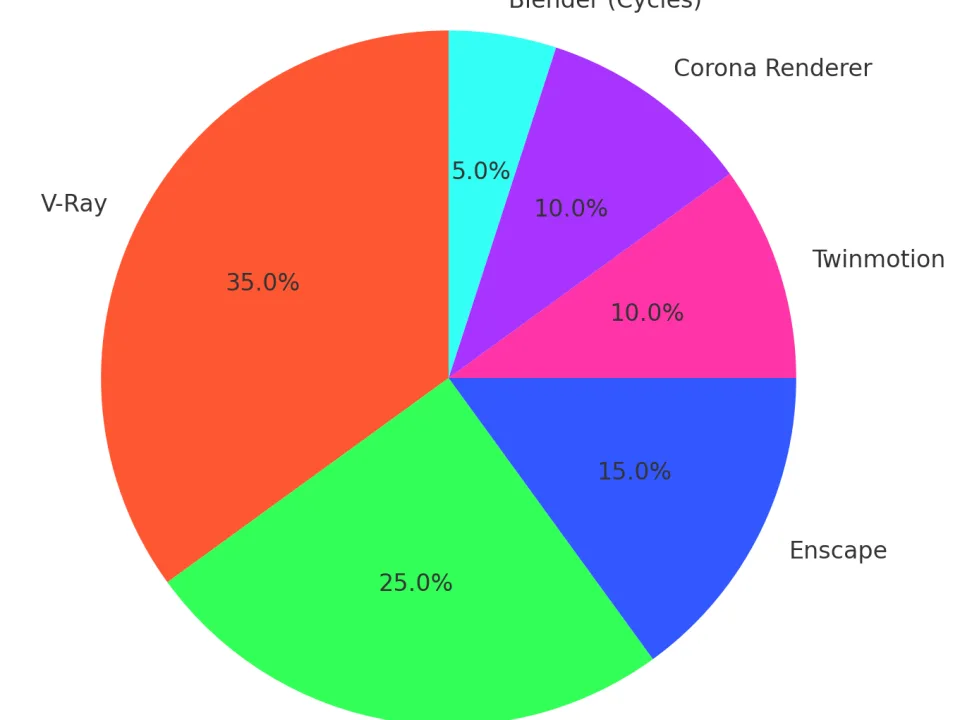
A realistic render also requires attention to color and artistic choices. To get realistic renders, you can use engines such as KeyShot, V-Ray, Corona Render and Enscape.
Before we move on to the points to watch for, if you would like us to produce high-quality renders for you, you can reach us through our contact page.
How to Get a Realistic Interior Render: What to Watch For
There are several points you need to pay special attention to when creating a realistic render. We can list them as follows:
Analyze the Interior Carefully
Render settings require careful analysis. When redrawing an existing interior, you must calculate very carefully how much light comes in from outside and how much the interior receives. You should also pay close attention to how daylight and night light look. For interiors designed from scratch, the light output to be used must be entered in the drawing software. Shadows and reflections are also very important for realism when rendering. Pay close attention to the amperage or wattage of the lights you plan to use.
You can follow these steps to get a realistic render:
- Prepare your model: First, prepare your model. Building it correctly and in detail helps you achieve a realistic result.
- Set up the lighting correctly: Correct lighting is one of the most important factors in a realistic render. By placing light sources correctly, you can light your model just as it would be lit in real life.
- Set up the camera correctly: Camera settings determine how you frame your model. By choosing the right camera angle, perspective and focal point, you can get a realistic image.
- Set up the materials correctly: Material settings help your model look as it would in real life. Every material has its own properties, such as the reflection of glass or the texture of wood. Setting these properties correctly leads to a realistic result.
- Configure the render settings correctly: Render settings determine render quality. By increasing render quality, you can make your model look true to life.
- Start the render: Once everything is set up correctly, you can start rendering. The render process uses your computer’s resources to visualize your model realistically. When it finishes, you have a realistic render.
In short, a realistic render requires a well-prepared model, correct lighting, camera and material settings, and properly configured render settings. By following these steps carefully, you can create a realistic render.
Using Photoshop
Besides render settings, you also need to use Photoshop or collage software. Interior designers in particular should develop strong Photoshop skills.
Photoshop matters at this stage because it fills in what render engines lack.
Never Reuse Renders from Other Interior Designers and Visualization Artists
Using other people’s projects is one of the most common mistakes today. Taking similar projects from the internet and copying their settings is a big mistake. Render settings you get from elsewhere will not match your software, settings, materials, drawings and textures. Anyone who wants to practice interior design properly should build their own settings based on the interior they have designed. With constant practice, interior designers can improve themselves significantly.
Pay Attention to Detail in Realistic Renders
To improve render quality and achieve realism, you must pay attention to details. The more time you spend on your drawings and the more you detail them, the higher your chances of success. The materials applied to the drawings are especially important. For high-quality renders, interior designers need to study the subject in depth. High quality comes from attention to detail.
Contact us for your realistic rendering projects.