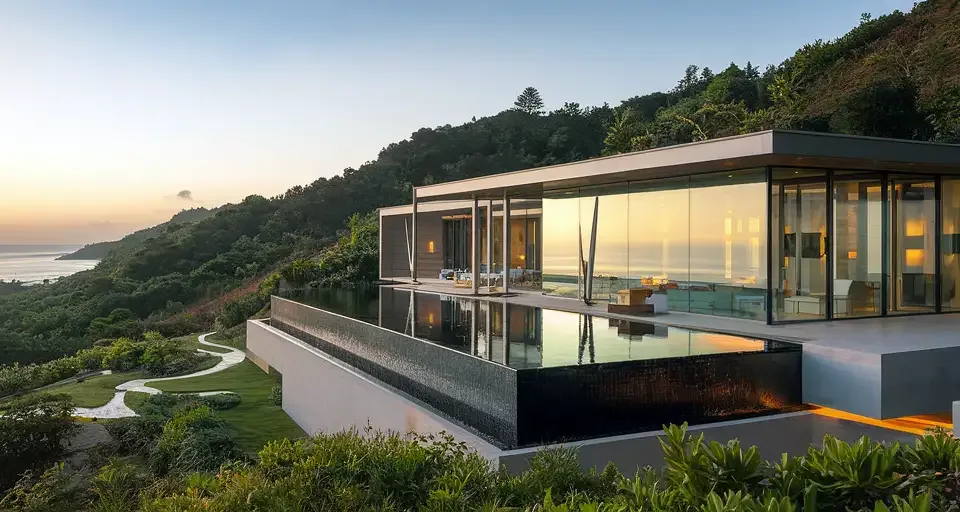
Tips for High-Quality Architectural Renders
Practical tips for high-quality architectural renders: shorter render times, better lighting, smart material choices, composition and Photoshop polish.

Ways to Reduce Render Time
Everyone wants high-quality architectural renders, and the tips below show how to get them while also keeping render time short. Nobody wants to sit in front of a PC for hours waiting for a render to finish.
Reducing render time is a key concern in 3D modeling and animation projects. Render time affects how long a project takes to complete and, as a result, how well the budget can be controlled. Fortunately, there are several ways to shorten it.
The first way to reduce render time is to simplify the scene. Using less detailed objects, choosing simpler materials instead of complex textures and removing unnecessary light sources can all help. Hiding parts of the scene that are not visible, rather than leaving them active, can also cut render time.
For high-quality architectural renders, another approach is upgrading your hardware. A faster processor, more memory and a powerful graphics card can shorten render time. It is also important to review your render settings to optimize render time. Running lower-quality preview renders to check how the scene looks, and quickly testing several settings before the final render, can save you a lot of time.
Finally, parallel processing is another way to reduce render time. With this technique, render time can be shortened and several scenes can be rendered at once, so you get results faster.
The Right Lighting Techniques for High-Quality Architectural Renders
The right lighting technique is one of the most important elements that can dramatically change how a 3D model looks. Light sets the atmosphere and feel of a scene and is used to focus the viewer’s attention. That is why 3D artists need to develop a range of strategies for applying the right lighting techniques.
One of the basic techniques for lighting a scene is three-point lighting. In this technique, the key light targets and focuses on the main object, while a secondary light illuminates the area around it. This brings out the object’s contours and strengthens the three-dimensional feel of the scene.
Another lighting technique is using the play of shadows. The right lighting presents the model realistically and gives the viewer a more convincing experience. The play of shadows comes from light cast by a natural light source and emphasizes the depth and scale of the scene.
High-quality architectural renders also depend on color balancing, an important part of good lighting. Color temperature and tones define the overall feel and mood of a scene, so artists need to choose the right color palette and use it in a way that suits the lighting.
What to Consider When Choosing Materials and Finishes
There are many factors to consider when choosing materials and finishes. First, check whether the material is durable and long-lasting. You should also consider its appearance and whether it suits the space. When choosing a finish, keep in mind how well the material resists water, heat and impact. How easy the material is to clean is another important factor.
Paying attention to how colors and patterns work together is also very important when choosing a finish. A finish that does not suit the overall decor of the space can create an unwanted look. Budget also needs to be considered: quality, durable materials are often more expensive, so budget calculations should be done carefully. Finally, do not overlook long-term use and ease of maintenance. With the right choice of materials and finishes, a space can stay stylish and practical for many years.
For high-quality architectural renders, it is important to research carefully and get expert advice when selecting materials and finishes. The right choice affects both the look and the durability of a space, so avoid rushing these decisions and plan them in detail.
Perspective and Composition Tips
Perspective and composition form the foundation of visual aesthetics in any artwork. The emotion and message a painting or drawing conveys depend largely on how well perspective and composition are used. Perspective is a technique for translating the three-dimensional appearance of an object into two dimensions. It lets the viewer perceive depth and distance in an image. Using perspective correctly gives the viewer a realistic and striking image.
Composition refers to how the objects, figures and colors in an artwork are brought together. Good composition requires the ability to arrange parts of the image so they guide the viewer’s eye and highlight the most important and eye-catching areas. To achieve this, the artist carefully arranges shape, color, light and shadow to create a specific effect on the viewer.
Perspective and composition tips help artists develop their visual storytelling skills. To create a layered presentation with depth, pay attention to the size, placement and proportions of objects. Guiding and engaging the viewer through a deliberate composition helps an artwork achieve its purpose.
By following these tips for high-quality architectural renders, artists can tell their visual stories more effectively and convey deeper emotions to viewers.
Using Photoshop to Improve Render Results for High-Quality Architectural Renders
For high-quality architectural renders, Photoshop is a powerful tool for improving render results and making images more striking. It offers extensive options, especially for lighting, color adjustment and detailing.
The Layers panel is very useful for editing render results. You can organize different effects, color adjustments and details on separate layers.
The Camera Raw filter lets you fine-tune color, contrast and brightness, so you can improve the light and shadow effects in your renders.
Clone and cleanup tools let you easily fix and remove unwanted details in your renders, giving you cleaner and more professional images.
For high-quality architectural renders, get in touch with us through our contact page.