Shared Teen Bedroom Ideas for Small Rooms
How to design a small shared teen bedroom for two, with bunk beds, smart furniture, light colors, wall storage and a layout that keeps the room open.

Designing a small shared teen bedroom for two As cities have grown, homes have become smaller and rooms narrower. Not having much space for every family member has created some challenges. Parents who want to design a teen bedroom for their children now have a few points to keep in mind. Designing a shared teen bedroom for two in a small room is not as hard as it seems, and it can even be fun.
Small spaces cannot be made bigger, but with the right use they can feel more spacious.
How Should a Small Shared Teen Bedroom for Two Be Designed?
To design a shared teen bedroom for two in a small room , pay close attention to the furniture you choose. Furniture that saves space should be selected with the children’s tastes and wishes in mind. Bunk beds or smart furniture are generally the best fit for rooms like this. A stylish, practical teen room can be designed with furniture that combines a bed on one side and a bookcase on the other. Small fold-out seats can also create a comfortable chill-out corner for teens.

For a shared teen bedroom for two in a small room, consider the following suggestions:
- Beds: In a small room, you can choose bunk beds or folding beds to save space. If possible, add shelves or cabinets to the headboards for extra storage.
- Wall Colors: You can use light colors to make the room look larger and more spacious. You can also add some character by highlighting walls with different colors.
- Functional Furniture: To save space, you can use dual-purpose furniture, for example a sofa with drawers or a folding desk.
- Storage: Storage is very important in a small room. You can add storage such as wall-mounted shelves, hooks, cabinets and drawers to keep the room organized.
- Lighting: Lighting makes small rooms look bigger and more open. Prioritize natural light and use several sources to keep the lighting soft and diffused.
- Decor: Decor is important for reflecting the room’s character. However, in a small room, too much decor can take up space. Use minimalist, functional accessories such as posters, wall decorations, baskets and frames.
By combining all these suggestions, you can design a functional, modern shared teen bedroom for two in a small room.

What Accessories Suit a Small Teen Bedroom?
Accessories can help a small room feel more spacious. When designing a teen bedroom, using mirrors, choosing good lighting and picking light tones are essential for making small spaces feel open. Choosing small accessories instead of large ones also helps make the most of a small space. A shared teen bedroom for two in a small room can also be made more practical with wall-mounted shelves. Smart storage options help avoid a cluttered look and make small spaces work.

How Should a Small Teen Bedroom Be Laid Out?
When designing a shared teen bedroom for two in a small room, it is essential that the space is practical. An uncluttered layout lets both children live comfortably. Keeping the sleeping area, study area and dressing area organized is very important. To save space, two of these areas can be combined with smart furniture. If that is not possible, placing each area in a different corner and leaving the center open will make the room feel spacious.

Reach us quickly through the contact page for your shared teen bedroom designs for small rooms.

Personal Space and Privacy in a Small Shared Teen Bedroom for Two
When two teenagers share a room, the biggest source of friction is not a lack of furniture but unclear personal space. So before we start designing, we define a zone each teen can call their own: a bed, a shelf, a drawer and, if possible, a small work surface. Shared areas, such as the wardrobe or a seating corner, are defined separately. Even inside the wardrobe, separating doors or colors noticeably reduces small arguments between siblings.
Teens often keep different schedules, too. One may study late while the other wants to sleep. Giving each bed its own reading lamp and each desk its own light is therefore a need, not a luxury. If you use a bunk bed, a curtain or fabric panel that attaches to the lower bunk gives the teen below a small retreat. Placing a shelving unit between the two beds also divides the space visually without blocking the light.
Another issue is growth. Furniture chosen today may feel too small in a few years. Height-adjustable desks, bunk beds that split into two single beds and modular shelves that can be taken apart and rebuilt make it easy to rearrange the room at every stage. On the safety side, we check that the top bunk has an adequate guardrail, that the ladder has solid steps and that the bunk bed is not placed in front of a window.
Catching Measurement Mistakes in a 3D Model
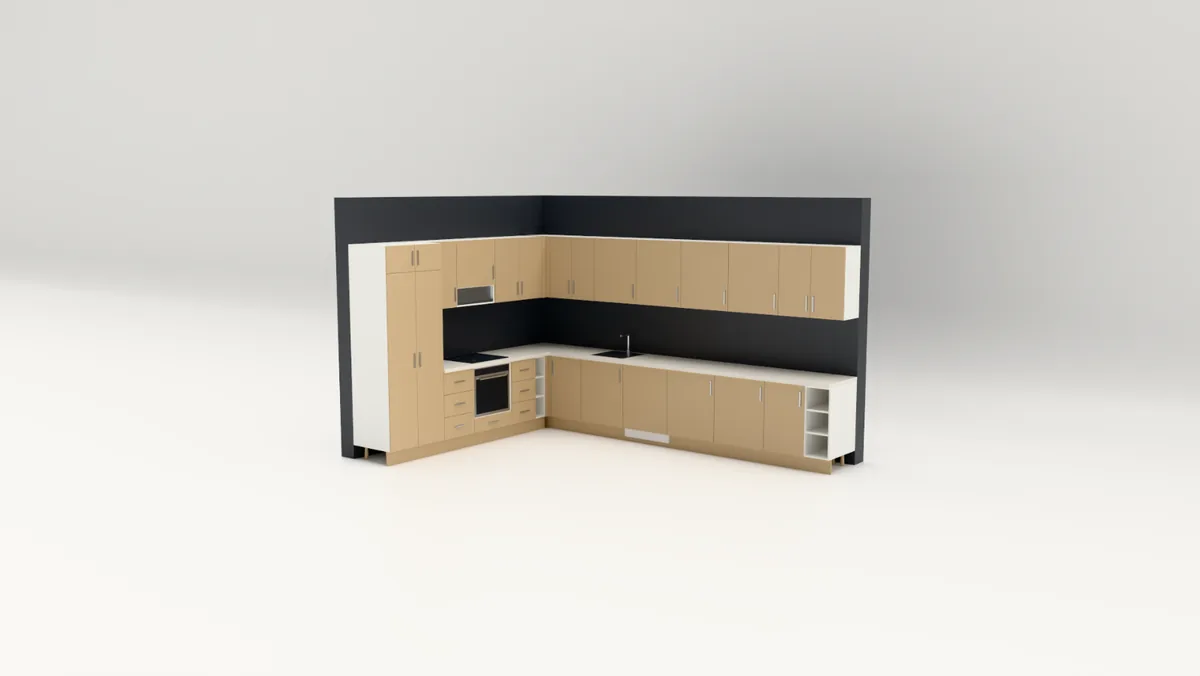
In small rooms, problems rarely show up on paper. A wardrobe door hitting the bed as it opens, a drawer that cannot open fully or a teen on the top bunk whose head comes close to the ceiling is usually noticed only after the furniture is in place. A 3D architectural modeling study built to the room’s dimensions reveals these clashes in advance. Letting teens see their room in a render and suggest colors and layouts also brings them into the process; they take more ownership of a room they helped choose. You can see how we visualize different room layouts among our architectural visualization projects.
Frequently asked questions
How do you fit two beds in a small room?
The easiest ways to fit two beds in a small room are a bunk bed, a fold-away bed or a trundle bed that slides out from underneath. If the room is long, placing the beds end to end along the same wall also leaves the center open. The right solution should be chosen by measuring together with the door and window positions.
Is a bunk bed or two single beds better?
If space is very tight, a bunk bed is the better choice because it frees the floor for studying and storage. If space allows, two single beds give each teen more privacy and make beds easier to make. Bunk beds that split apart combine both options and make it easier to rearrange the room as the teens grow.
How do you separate personal space in a room shared by siblings?
Personal space is separated by assigning each sibling their own bed, shelf, drawer and lighting. Light dividers such as a shelving unit, a curtain or a change of color create zones without shrinking the room. Agreeing on rules for the shared wardrobe and seating corner from the start also makes sharing much easier.