Villa Exterior Designs: Styles and Materials
Six villa exterior design styles, from traditional and modern to Mediterranean and Art Deco, plus facade material and color choices for a simple, elegant look.

Villa Exterior Designs, Most of the first impression a villa makes comes from its exterior. Whether it is grand or understated, a well-made facade gives the building a character of its own. This guide walks through the main villa exterior design styles, the materials behind them, and the lighting and landscaping that complete the picture.
Spread over generous plots, villa exterior designs can head in very different directions depending on who owns them. Some owners want rich, heavy detailing; others make their point with a restrained facade where every joint is carefully finished. Color is a big part of that identity. The same villa can look like a completely different house in vivid, attention-grabbing tones or in calm, natural ones.
What Should Villa Exterior Design Styles Offer?
Above all, villa exterior designs have to last. The materials may be chosen for their looks, but they also need to stand up to rain, sun and frost for years. That is why, before we start on a design, we look at where the villa actually sits. Salty sea air, a harsh mountain winter or a scorching summer can take the same material to very different places. A facade is only truly durable once all of these conditions have been considered together.
From the outside, the roof is usually the first thing you notice. Its form is settled early with the owners: pitched, flat or terraced? After that, the wall materials and the ground around the building get the same level of attention. Roof, walls and grounds can each look fine on their own; what matters is that all three speak the same language.
A good villa facade reflects the style of the house, the personality of its owners and the architecture of the building all at once. The styles below are a useful starting point:
- Traditional Style: Warm and inviting. Usually pitched roofs, wide balconies and stone or brick cladding. It sits comfortably in its natural surroundings.
- Modern Style: Built on a minimalist approach. Clean, straight lines and materials such as glass and metal create the modern look, while large windows and terraces connect the interior with the outdoors.
- Mediterranean Style: Mostly white render, picked out with vivid colors such as bright blues and oranges. Generous open areas, gardens and courtyards give it a warm, airy feel.
- Country Style: Brings traditional lines together with modern touches. Rustic materials, wood and stone lead the way, rounded off with wide verandas, gardens and pools.
- Art Deco Style: Echoes the transformation of the 1920s and 1930s. Geometric forms, pastel colors and shiny metallic surfaces give it a luxurious, sophisticated look.
- Sailboat Style: A natural fit for villas by the sea. White render, wide balconies and sail-like forms that emphasize open space are its signature.
These styles rarely appear in pure form; most projects blend two or three of them. In the end, what decides the design is the owner’s taste and the way they actually live.
Ideas That Make a Modern Villa Facade Stand Out
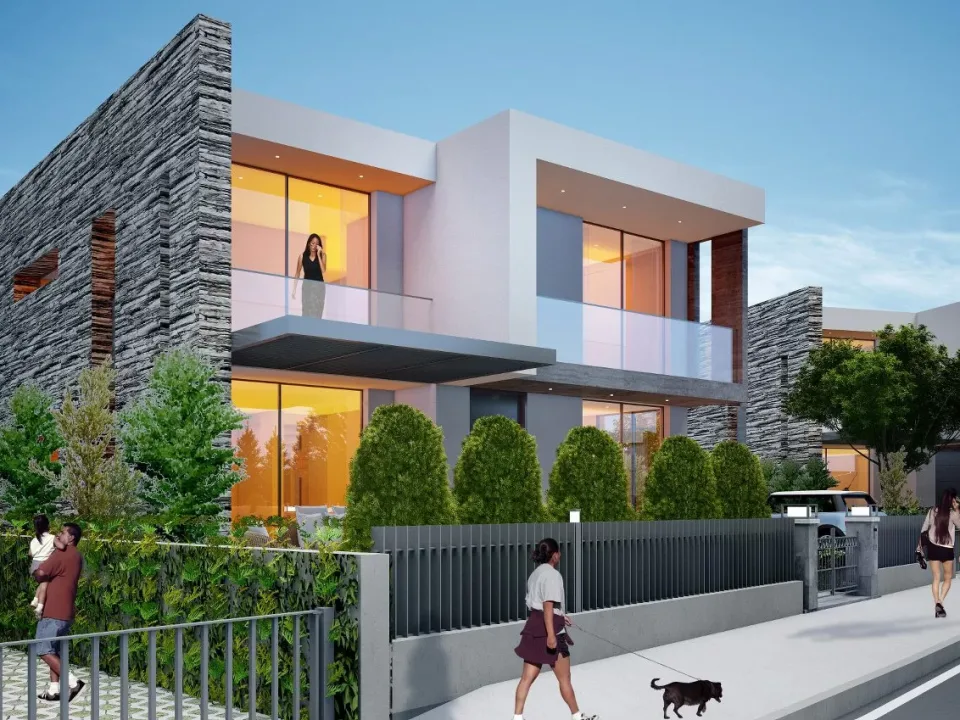
A modern facade does not have to be dull just because it is simple. What makes the difference is usually the choice of materials. Wood-look wall cladding takes the chill off concrete and gives the facade a warm, welcoming face. Less conventional materials such as metal and reflective glass pull the sky, the garden and the changing daylight onto the building and keep it feeling alive.
Mixing claddings is another approach we like. A wood-clad surface right next to a stone-clad wall makes the texture of both more obvious. Breaking the mass into blocks of different sizes, rather than treating it as a single box, produces an asymmetric, dynamic facade, so the villa looks a little different from every angle. Large windows, meanwhile, bring in more daylight and make the house feel bigger than it is.

Which Materials Should Be Used in Villa Exterior Design?
One of the most widely used materials in villa exterior designs is polyurethane. Because it insulates, it can remove the need for a separate layer of external insulation on the facade. It is light and durable, which makes it easy to install. Polyurethane provides heat, sound and water insulation and can be applied to almost any surface, metal included. It is especially handy for decorative facade elements and is a budget-friendly option.
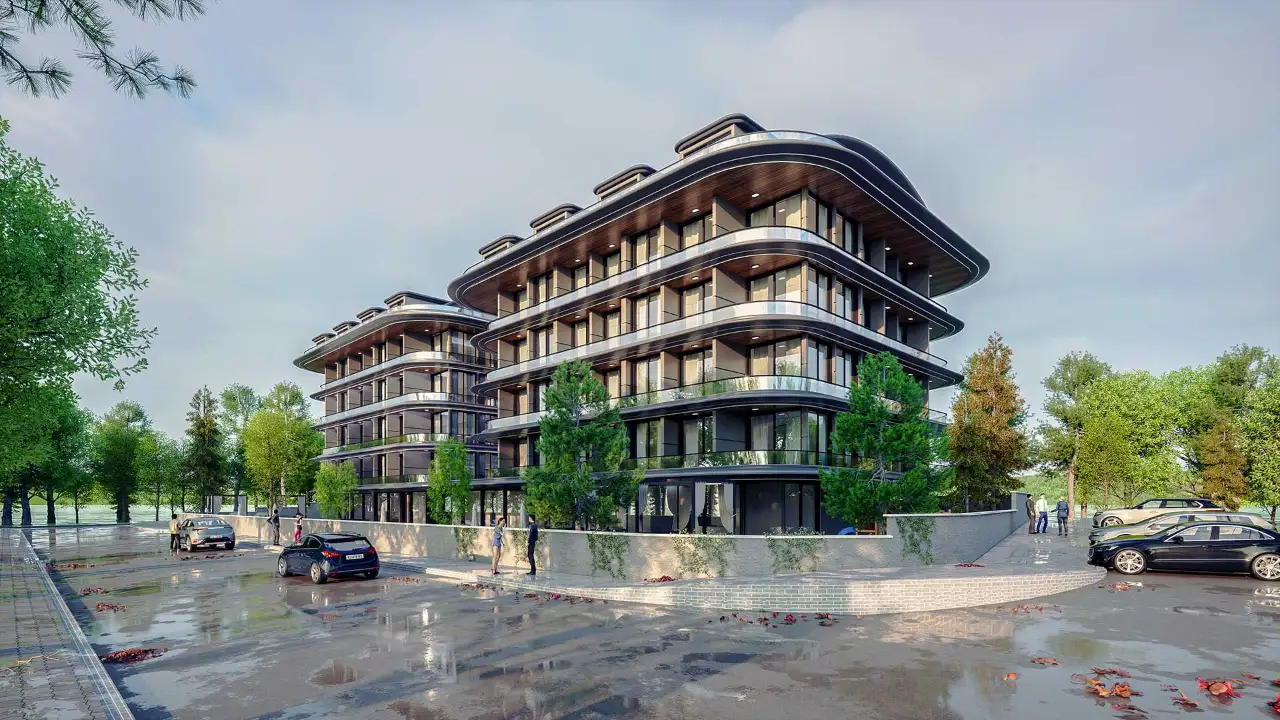
Alongside polyurethane, natural materials such as wood, stone and metal are common on modern villas. They hold up well against the weather and gain character as they age. Here again, the local climate should drive the choice: the cladding that looks best on paper can turn into a maintenance headache within a few years in the wrong climate.

Simple Facade Design for Villas
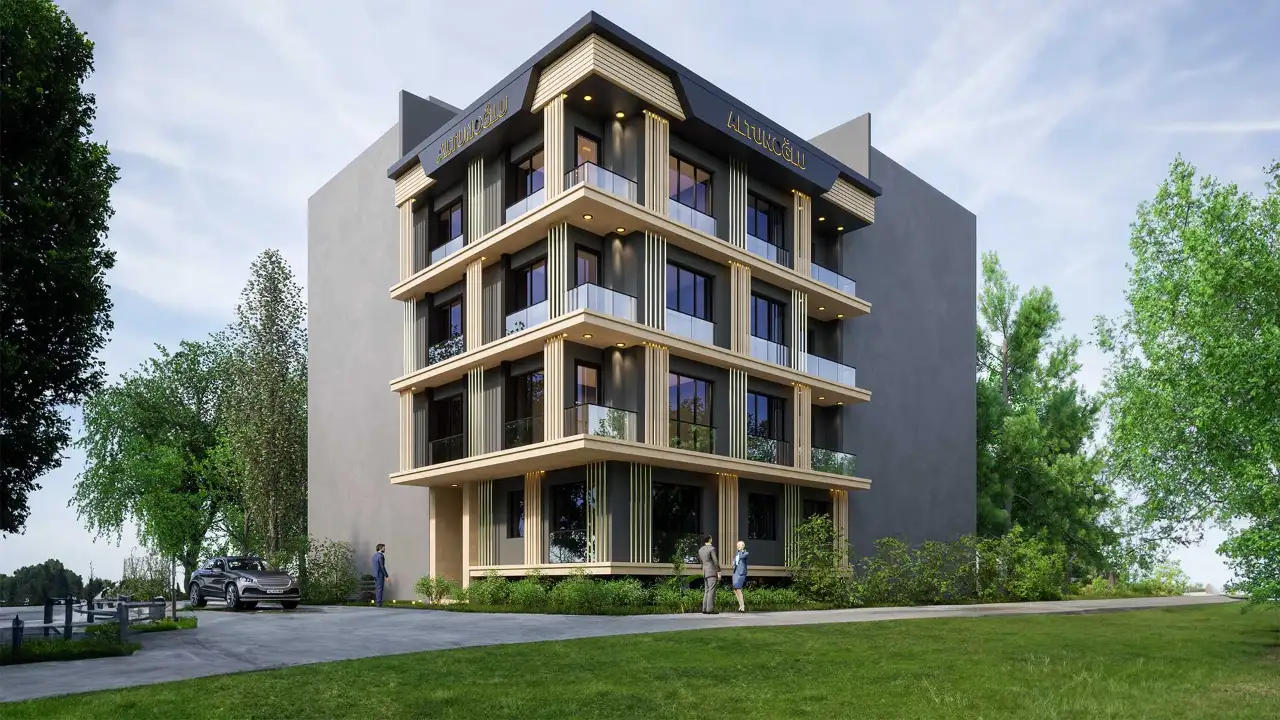
Shaped around what the owners want, villa exterior designs increasingly lean towards simplicity. Facades built with calm details and well-judged proportions, nothing heavy-handed, are what more and more people ask for.
The most important step towards a simple facade is choosing the color. The right color alone can give the exterior a quiet, settled feel. A limited palette, two or three materials and carefully aligned windows often produce the most timeless result.
How Should Villa Exterior Lighting Be Planned?
Once the walls, windows and garden are finished in quality materials, the job is still not done: a villa spends half of every day in the dark. Exterior lighting keeps the textures and lines you worked so hard on visible after sunset. Well-planned light makes a villa look more modern and refined, and gives it a completely different atmosphere from the one it has by day.
When we prepare renderings, we often show a villa in both a daytime and a night-time setting, and every time we are reminded how different the two stories are. That is why we suggest treating lighting as part of the facade design from the start, not as a detail bolted on at the end.
Designing the Facade and the Garden Together
A villa’s exterior does not stop at its walls. When the garden and landscape are planned together with the facade, the building settles into its site and looks as if it belongs there. Planting softens the hard lines of a modern facade and naturally ties in with materials such as wood and stone.
There are many things to weigh up in facade design, but they all lead to the same place: a look of its own that sets the villa apart from the buildings around it. That only comes from the right materials, good proportions and care over the details. A facade that is simple and easy on the eye, yet still draws attention, is one that will not date quickly.
Contact us for your villa exterior designs.
For building types beyond villas (apartments, residential complexes, commercial buildings) see our exterior facade design examples.
We compare villa types (single-story, duplex, triplex) and who each one suits in our villa design types guide.
Related articles: Retail Store Design Services: Layout, Windows and Customer Flow · Hotel Room Designs: Styles and Decor Tips